



Cross Infection Control

Cross Infection Control - Bayswter Dental Clinic
In a dental clinic, provision of the best dental care does not just limit to a good dentistry, excellent customer service and the best chair side manners. It goes well beyond that.
One of the most important aspects of “best dentistry and dental care”, provided by the best dentist, is achieving infallible "cross infection control in dentistry." That is preventing transmission or transfer of bacteria or viruses between patients and others. Transmission of pathogens can happen in mainly two ways. One is the instruments and equipments used. Second through the air and generation of aerosols.
At Bayswater Dental Clinic, we take cross infection control in dentistry extremely seriously and not only fully follow and implement the standards set up by regulatory bodies such as Care Quality Commission (CQC), but we go beyond that to ensure we achieve the latest and highest standards for the safety of our patients and our dental team.


Disinfection of Instruments and Equipments
In the human mouth, there are several hundreds of infectious microorganisms, namely, bacteria and viruses with HIV and Coronavirus as examples.
One of the commonest forms of pathogen transmission in dentistry is through the use of instruments and equipment, making proper cleaning of dental instruments and effective dental disinfection essential. To help reduce these risks, we have taken several measures;
We follow the standard set out by the regulatory bodies. Further more, we follow the highest standards set out by them and implement their recommendations in addition to complying with their basic standard guidelines and essential requests.
We use top of the range materials and equipments, at much higher costs, for cold and hot sterilisation of the instruments and equipment. As an example we use Vacuum Autoclaves for hot disinfection of our instruments which allow sterilisation of the most inner parts of the instruments that have internal sections, like the dental drills, where traditional autoclaves are not as effective in accessing those inner parts.
As much as possible, although it involves higher costs, we use disposable materials and equipment, so nothing is shared between patients, substantially reducing the risk of cross infection and supporting strict cross infection control in dentistry.
These are some of the measures we have taken to ensure the highest standard of cross infection control in our dental clinic.
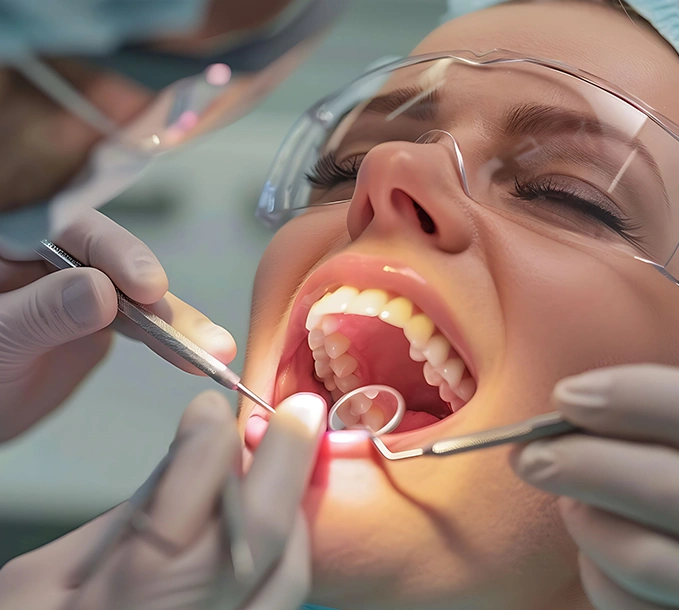
Measures Taken to Reduce Cross Infection Through Aerosol Generated Pathogens
During dental treatments, when using dental equipment and instruments, “bio-aerosols” are generated as the result of oral cavity access, tooth scaling and tooth preparations. The large number of water mist and aerosols generated during the treatment carries numerous pathogens which could be floating and staying in the air for several hours, potentially causing a huge threat to the health of patients and dentists. These pathogens can remain for several hours in the air even after a patient has left the surgery. Sars-Covid 19, commonly known as Coronavirus, is one of the pathogens that can remain floating for a long time in the confined space of a surgery.
At Bayswater Dental Clinic, we are one of the very few dental clinics in the U.K. that have taken measures to reduce the risk of cross infection through aerosol generated pathogens by placing “plasma air purifiers”. Based on the manufacturers information, High-pressure Plasma Air Purifier, uses the latest technology in removing the pathogens such as viruses floating in the surgery space.
This, in addition to the other measures we have taken, substantially reduces the risk of cross infection through the aerosol generated pathogens in our clinic.
- Monday 09:00AM - 08:00PM
- Tuesday 09:00AM - 08:00PM
- Wednesday 09:00AM - 08:00PM
- Thursday 09:00AM - 08:00PM
- Friday 09:00AM - 08:00PM
- Saturday 09:00AM - 08:00PM
- Sunday 09:00AM - 04:00PM
Start your journey

Book Now
View available appointment time slots and book in at your convenience

Make an Enquiry
Provide us with your details and we'll get in touch
Got a Question?
Speak live with one of our expert dental care team members.
