



Different Types Of Hyaluronic Acid Fillers In The Market
Types of Hyaluronic Acid Fillers for Lips
Introduction
Not all hyaluronic acid (HA) fillers are the same—various formulations exist to suit different lip goals and anatomical needs. This guide helps you understand the main types, their characteristics, and how your clinician chooses the right one for you.

Key Properties That Differentiate HA Fillers
When selecting an HA filler for lips, practitioners consider several technical properties that influence performance:
- Viscosity / Gelling strength: How thick or resistant to flow the filler is
- Elasticity (or “G’” value): The ability to maintain shape under stress
- Cohesiveness / crosslinking: How well the particles bind together
- Water absorption (hydrophilicity): How much fluid the filler draws in
- Particle size & smoothness: Larger or more robust particles hold volume; smoother particles provide softer texture
- Duration & breakdown rate: How long the filler resists degradation
- Addition of local anaesthetic: Many formulations include lidocaine for comfort
These factors help match a filler’s behaviour to your lip structure, movement, and desired result.
Common Types of HA Fillers Used for Lips
Here are the principal categories and how they’re used in a lip context:
-
Soft / Low-Viscosity (Light) HA Fillers
These are more fluid and flexible, ideal for subtle volume boost, smoothing fine lines around the lips, or blending borders. They tend to integrate softly into tissue and move naturally with lip motion.
Use cases: fine lip enhancement, light contouring, early-stage filler users.
-
Medium / Balanced HA Fillers
These provide a middle ground: enough structure to support shape, but with enough flexibility to move comfortably. Many clinicians choose this type for general “lip filler” tasks, because it balances volume and natural feel.
Use cases: moderate volume augmentation, correcting slight asymmetries, creating gentle projection.
-
Firm / High-Viscosity / High G’ Fillers
These are denser and more supportive. They resist compression and maintain sharper definition. In lips, they are used carefully for clients who want noticeable projection or support to lip corners, especially where tissue is more rigid.
Use cases: structural enhancement, stronger projection, building support in areas with weaker tissues.
-
Crosslinked or Hybrid HA Fillers
Many modern HA fillers use advanced crosslinking methods or hybrid particle structures to improve longevity and reduce degradation. These are often tailored to resist breakdown in dynamic areas like the lips without becoming overly stiff.
Use cases: longer-lasting lip enhancement, clients wanting fewer repeat visits.
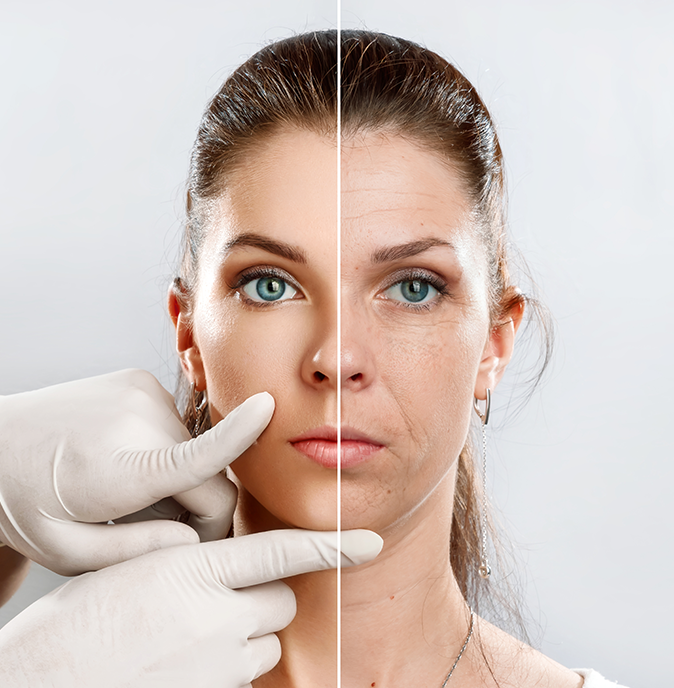
How a Clinician Chooses Which Filler to Use
Your practitioner will evaluate:
-
Lip anatomy & skin quality
Thin or delicate lips may respond better to lighter fillers, while thicker tissue may tolerate denser formulas.
-
Your movement / lip dynamics
If you talk, smile, or animate your lips a lot, your filler needs to be flexible enough to move with you.
-
Desired effect
Subtle enhancement favors light or medium fillers; bold projection or reshaping might call for firmer ones.
-
Duration expectations
If you want longer-lasting results, crosslinked or hybrid formulas may be preferred.
-
Safety & reversibility
Even with denser fillers, clinicians often pick HAs that are dissolvable with hyaluronidase if necessary.
Advantages & Trade-Offs of Each Type
While final pricing can only be confirmed after assessment, here’s a general guide for the UK market and clinics in London:
| Filler Type | Advantage | Trade-Off / Consideration |
|---|---|---|
| Soft / low-viscosity | Natural integration, gentle feel | May not provide strong projection |
| Medium / balanced | Good balance of shape and flexibility | Moderate support, not extreme projection |
| Firm / high-viscosity | Stronger definition, structural effect | Greater risk of stiffness or unevenness if overdone |
| Crosslinked / hybrid | Durability, stability over months | May feel a bit firmer initially |
Your injector’s skill in layering, spreading, and blending is as important as the filler type itself.
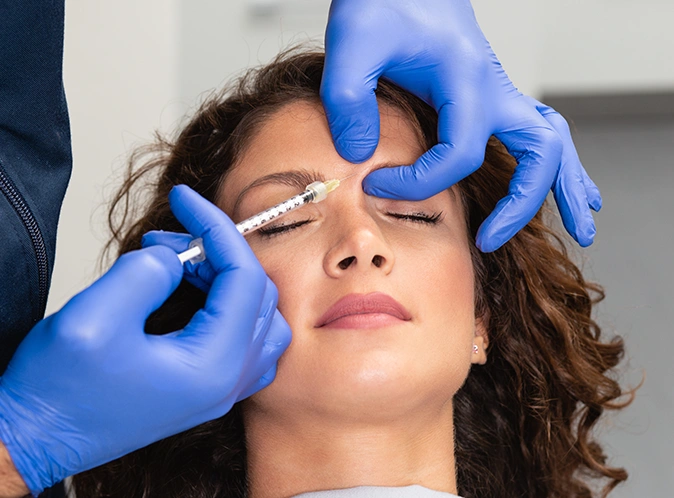
Safety & Correction Considerations
- Always use HA fillers from reputable manufacturers with clear ingredient profiles.
- Ensure that the filler chosen is compatible with dissolving agents (hyaluronidase), so adjustments or reversals are possible.
- Be cautious when injecting near blood vessels; avoid overfilling or excessive pressure.
- In highly vascular areas, lower-viscosity HAs or small increments are safer.
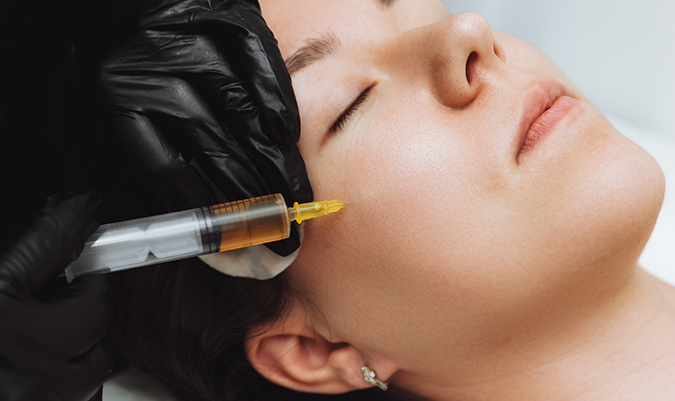
How It Translates to Your Experience
- You might feel less stiffness with softer HAs, particularly during movement.
- Sharper lip edges or “cupsids’ peaks” may need firmer fillers in small, controlled amounts.
- A blended technique is common— combining softer and firmer fillers in different layers or zones.
- Over the first few days, some smoothing and settling occurs: even firm fillers soften slightly as they integrate.
Frequently Asked Questions (FAQs)
-
Do firmer fillers look unnatural?
Not necessarily—when placed thoughtfully and in moderation, firmer fillers can enhance shape without looking “fake.” The key is balance and expert technique.
-
Can we combine filler types in one treatment?
Yes—many practitioners use layered strategies, applying softer filler in the lip body and firmer filler on edges or support zones.
-
Which filler type lasts longest?
Denser or more crosslinked fillers often last longer, but individual metabolism and movement also play major roles.
-
Are all fillers dissolvable?
Only HA-based fillers can typically be dissolved with hyaluronidase. Other filler types may not be reversible or may require more complex techniques.
-
Does firmer filler cause more bruising?
Potentially a bit more pressure is involved, which may slightly raise bruising risk, but a skilled injector can minimise this by using fine technique and small boluses.


- Monday 09:00AM - 08:00PM
- Tuesday 09:00AM - 08:00PM
- Wednesday 09:00AM - 08:00PM
- Thursday 09:00AM - 08:00PM
- Friday 09:00AM - 08:00PM
- Saturday 09:00AM - 08:00PM
- Sunday 09:00AM - 04:00PM
Start your journey

Book Now
View available appointment time slots and book in at your convenience

Make an Enquiry
Provide us with your details and we'll get in touch
Got a Question?
Speak live with one of our expert dental care team members.
