


1. History Of Botox?
The History of Botox (Neurotoxin Treatment)
Introduction
Botox, or botulinum toxin type A, is one of the most recognised and widely used medical injectables in the world. Yet its origins are not cosmetic at all. The story of how a potent bacterial substance evolved into a safe, controlled and life-enhancing treatment is one of scientific curiosity, clinical precision, and decades of research.
Early Discovery
The story begins in the 19th century, when foodborne illnesses caused by spoiled meat led researchers to investigate their source. A bacterium—Clostridium botulinum—was eventually identified as the cause. Scientists realised that this organism produced a toxin capable of affecting nerve communication, which in large quantities could cause paralysis.
Over the next several decades, chemists and microbiologists studied the toxin in controlled laboratory settings. They discovered that when used in extremely small and purified doses, its ability to temporarily block nerve signals could have valuable medical applications.
From Laboratory to Medical Practice
By the mid-20th century, researchers had learned how to isolate and purify botulinum toxin safely. Laboratory trials showed that it could relax overactive muscles by preventing the release of acetylcholine—a chemical messenger that triggers muscle contraction.
This discovery sparked interest among ophthalmologists and neurologists. In the 1970s, medical researchers began experimenting with minute doses to treat patients suffering from eye muscle disorders such as strabismus (crossed eyes) and blepharospasm (uncontrollable eyelid spasms). The results were promising: targeted muscles relaxed without the need for surgery.
The First Medical Approvals
By the late 1980s, botulinum toxin type A was approved for medical use to treat muscle spasms around the eyes. This marked the beginning of its regulated medical journey. Shortly afterwards, additional approvals followed for neurological conditions involving muscle overactivity, such as cervical dystonia, limb spasticity, and later, migraine and excessive sweating (hyperhidrosis).
Each new clinical milestone strengthened its reputation for safety and precision when used in professional hands.
The Cosmetic Discovery
The cosmetic potential of Botox emerged almost by accident. Doctors treating patients for eye spasms noticed that their frown lines and wrinkles appeared smoother following treatment. This observation led to formal studies exploring its cosmetic benefits.
In the early 1990s, specialists demonstrated that carefully placed injections could reduce facial lines caused by repetitive muscle movement—such as frowning, smiling, or squinting. The results were subtle, natural, and achieved without surgery.
By the early 2000s, Botox had gained official approval for cosmetic use, first for frown lines between the eyebrows and later for forehead lines and crow’s feet. Its popularity grew rapidly as patients realised they could achieve smoother skin and a refreshed appearance with minimal downtime.
The Evolution of Modern Botox
Since its first cosmetic approval, Botox has evolved into one of the world’s most extensively studied aesthetic treatments. It is now used in medical and cosmetic clinics globally, with strict quality control and proven safety standards.
Today, practitioners use it to treat a wide range of concerns:
- Frown lines and forehead creases
- Crow’s feet around the eyes
- Neck bands (platysmal cords)
- Gummy smiles and jaw clenching
- Facial asymmetry and masseter hypertrophy (prominent jaw muscles)
- Excessive sweating (hyperhidrosis)
Advancements in formulation and technique have made treatments more precise, predictable, and natural-looking than ever before.
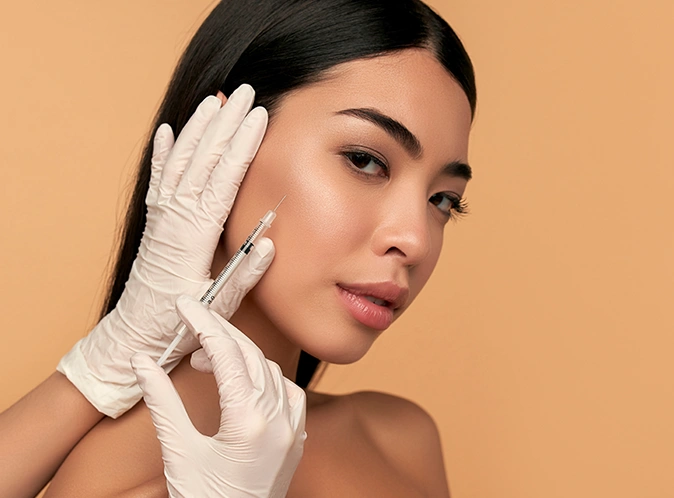
Key Milestones in the History of Botox
- 19th century – The bacterium Clostridium botulinum is discovered and identified as the source of foodborne botulism.
- 1940s–1950s – Scientists isolate and purify the toxin, learning how it blocks nerve signals to muscles.
- 1970s – Clinical use begins for treating eye muscle disorders and facial spasms.
- 1980s – Medical approvals are granted for several neuromuscular conditions.
- 1990s – Cosmetic benefits are identified, and the first studies on wrinkle reduction are published.
- 2000s onward – Widespread use in both aesthetic and medical fields, with continued refinement of technique and product safety.
Safety Through Science
While the origins of botulinum toxin lie in a naturally occurring bacteria, the modern medical formulation used today is highly purified and precisely measured. Doses are extremely small, and each vial is manufactured under strict laboratory conditions.
When injected by qualified professionals, Botox does not travel through the body or accumulate. Its action remains localised to the treated muscle, where it temporarily blocks nerve signals before naturally breaking down over several months.
This level of scientific control and clinical oversight is what makes modern neurotoxin treatment safe, predictable, and trusted.
Beyond Aesthetics
Though most people associate Botox with wrinkle reduction, it continues to play a significant medical role. Doctors use it to help patients manage chronic migraines, muscle stiffness following neurological conditions, excessive sweating, and even certain bladder issues.
This dual medical and cosmetic value is part of what makes it unique among modern injectables — it improves quality of life as much as it enhances appearance.
Botox Today
Decades after its discovery, Botox remains the gold standard for non-surgical facial rejuvenation. Its versatility, reliability, and proven safety record have made it a cornerstone of modern aesthetic medicine. With ongoing research, new applications continue to emerge, offering patients even more refined and individualised results.
At Bayswater Dental Clinic, treatments are carried out only by experienced clinicians who use advanced techniques to achieve balanced, natural-looking effects while maintaining full regard for patient safety and comfort.


- Monday 09:00AM - 08:00PM
- Tuesday 09:00AM - 08:00PM
- Wednesday 09:00AM - 08:00PM
- Thursday 09:00AM - 08:00PM
- Friday 09:00AM - 08:00PM
- Saturday 09:00AM - 08:00PM
- Sunday 09:00AM - 04:00PM
Start your journey

Book Now
View available appointment time slots and book in at your convenience

Make an Enquiry
Provide us with your details and we'll get in touch
Got a Question?
Speak live with one of our expert dental care team members.
