



What Is The Procedure For Composite Bonding
Procedure for Composite Bonding
Introduction
Composite bonding is a minimally invasive cosmetic dental treatment that uses tooth-coloured resin to improve the shape, colour, or symmetry of teeth. Below is a step-by-step guide on how the procedure usually works, what to expect, and how we customise it to your smile.
Step 1: Initial Assessment & Planning
- We start with a consultation where your dentist examines your teeth, discusses your goals (shape, colour, gaps, repairs) and reviews your dental history.
- We assess oral health, check for decay or structural issues, and decide whether bonding is suitable.
- In many cases, we prepare a trial smile: using a wax or resin mock-up on a cast model so you can preview how the changes will look before any permanent work begins.
- If you plan to whiten your teeth, it’s often done before bonding to ensure all bonded areas match your final shade.
Step 2: Shade Selection & Preparation
- Once the plan is settled, we select one or more composite resin shades that best match or enhance your natural teeth.
- The surface of the tooth is cleaned, dried, and isolated (often with rubber dam or cotton rolls) to prevent moisture interference.
- A mild etching agent is applied to the enamel to promote adhesion (this makes microscopic texture for the resin to grip).
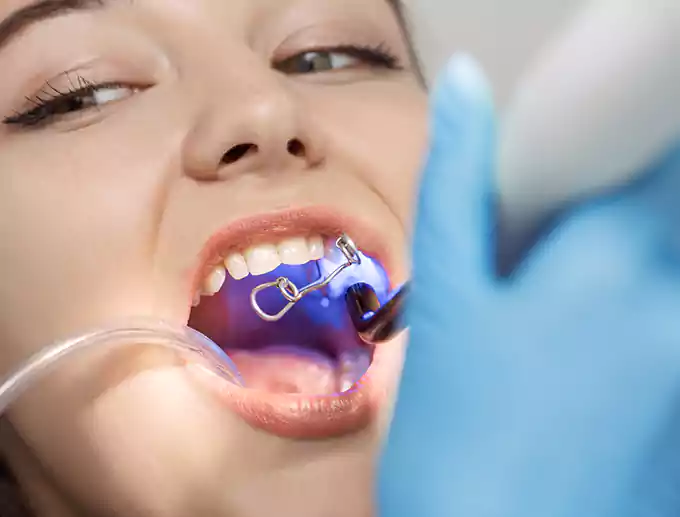
- A bonding agent (adhesive) is applied and cured with a special light.
3. Biological Response & Bone Adaptation
- The composite resin is layered onto the tooth in small increments.
- Your dentist sculpts and shapes each layer to create the desired contour, using hand instruments and brushes.
- During layering, the resin is hardened (“cured”) with a special light to set each stage before adding more.
- Incremental layering helps control shape, translucency, and strength.
Step 4: Sculpting, Polishing & Finish
- After final layering, the resin is trimmed, shaped, and smoothed to match your tooth’s surface and adjacent teeth.
- We carefully blend borders, refine edges, and adjust the surface texture for a natural appearance.
- A series of polishing discs, brushes and pastes are used to bring the restoration to a glossy, enamel-like finish.
- You may be asked to gently bite or test your bite so that any high points can be adjusted.
Step 5: Review & Adjustment
- We’ll review the result with you, checking how the bonded teeth look and feel in relation to your smile and how they work when you bite or speak.
- Minor adjustments can be made immediately: smoothing, refining shape, or correcting slight unevenness.
- You may be asked to return for a follow-up check after a week or two to ensure the bonding has settled well and there’s no sensitivity or issue.
What Affects the Process & Timing
- Number of teeth treated — more teeth require more time
- Complexity of changes (small chips vs full contour redesign)
- Whether a trial mock-up is used
- Need to remove existing restorations or old resin beforehand
- Shade matching and layering detail required
- Your comfort and cooperation during the process
Most bonding treatments are completed in one visit, though more involved makeovers may require multiple sessions.

Post-Procedure Expectations
- Mild sensitivity or slight roughness immediately after, which usually resolves quickly
- The bonded surfaces may feel a bit bulky initially but soften as you adjust
- Avoid stain-causing foods and habits (coffee, wine, smoking) for a few days
- Maintain excellent oral hygiene and regular check-ups to extend longevity


Opening Hours
- Monday 09:00AM - 08:00PM
- Tuesday 09:00AM - 08:00PM
- Wednesday 09:00AM - 08:00PM
- Thursday 09:00AM - 08:00PM
- Friday 09:00AM - 08:00PM
- Saturday 09:00AM - 08:00PM
- Sunday 09:00AM - 04:00PM
×
Start your journey

Book Now
View available appointment time slots and book in at your convenience

Make an Enquiry
Provide us with your details and we'll get in touch
Got a Question?
Speak live with one of our expert dental care team members.
